Parquet Polishing vs Replacement: What Singapore Homeowners Should Know
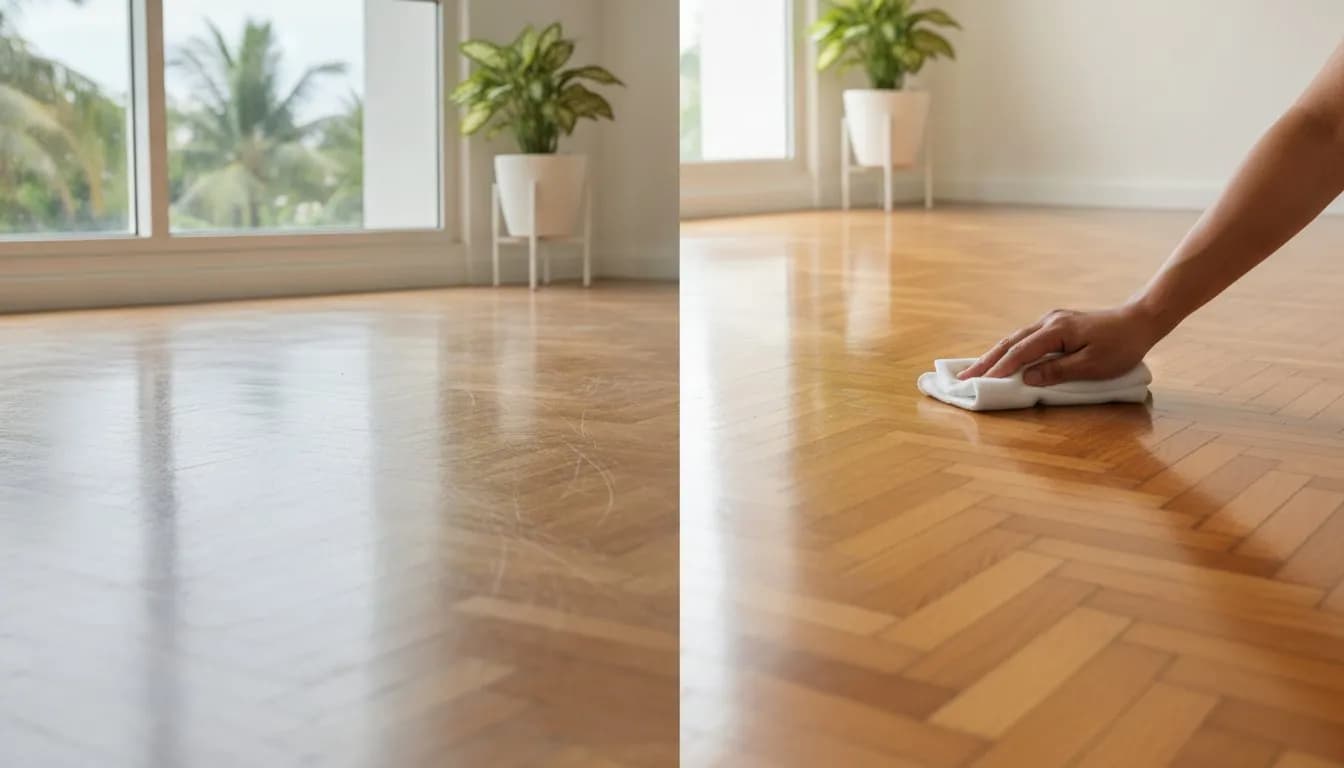
Parquet Polishing vs Replacement: Which Makes Sense for Your Singapore Home?
Parquet flooring is everywhere in Singapore, particularly in older HDB flats, resale condominiums and landed homes built in the 1990s and 2000s. It adds warmth and character that tiles struggle to match. But parquet ages visibly, and once the varnish wears through, homeowners face a familiar question: should I polish it or replace it?
The answer depends on the condition of the veneer, the extent of the damage and how much disruption you can tolerate. This guide breaks down both options honestly.
What Actually Happens to Parquet Over Time
Singapore parquet is usually made of thin strips of hardwood veneer bonded to a timber base. The wear layer is only a few millimetres thick, which is why sanding must be done carefully.
Year 1 to 3: The varnish starts to dull in high-traffic paths such as doorways and corridors.
Year 3 to 7: Surface scratches appear, colour fades unevenly and small gaps open between strips.
Year 7 onwards: Water marks, black patches and cupping may develop if moisture reaches the timber.
Polishing addresses everything in the first two stages. The third stage depends on how deep the damage goes.
When Polishing Is the Right Answer
The parquet is still firmly bonded and does not sound hollow when tapped.
Wear is mostly surface scratches, dullness and colour fading.
There are only a few water marks, not widespread blackening.
The veneer still has enough thickness for at least one more sanding cycle.
You want to keep the original parquet pattern and character.
Budget or timeline rules out a full replacement.
In these cases, sanding and refinishing typically restores 80 to 90 percent of the original appearance at a fraction of the cost.
When Replacement Is Unavoidable
Large areas have lifted, cupped or separated from the subfloor.
Black mould or rot has spread into the timber base.
The veneer is too thin to sand again without exposing the core.
There is significant termite or water damage.
You are changing floor levels or converting the space entirely.
A reputable contractor should tell you honestly when polishing will not deliver a lasting result, rather than taking the job anyway.
Cost Comparison
Option | Indicative Cost | Downtime | Result |
|---|---|---|---|
Sanding and polishing | Lower | 2 to 3 days | Original parquet, refinished |
Overlay with vinyl | Moderate | 1 to 2 days | New surface, raised floor level |
Full replacement with parquet | High | 1 to 2 weeks | Brand new timber |
Replace with homogeneous tiles | High | 1 to 3 weeks | Hard surface, hacking required |
Time and Disruption
Polishing is a contained operation. Machines run for two to three days, varnish needs time to cure, and furniture must be kept off the floor for around three to five days. You can usually remain in the home throughout.
Replacement is a construction job. Hacking, debris removal, levelling and curing all add up, and most households prefer to be away for at least part of it.
What About Overlaying With Vinyl or Engineered Wood?
Overlaying is a popular middle path. You avoid hacking, keep the existing substrate and gain a fresh surface quickly. However, overlaying raises the floor level, which can affect door clearance and skirting. It also hides rather than solves underlying moisture problems, so any dampness must be fixed first.
How to Extend the Life of Your Parquet
Keep indoor humidity moderate with ventilation or a dehumidifier.
Wipe up spills immediately, especially near bathrooms and kitchens.
Avoid wet mopping; use a damp mop and dry the surface after.
Place felt pads under all furniture legs and use rugs in high-traffic zones.
Refinish at the first sign of dullness rather than waiting for bare wood to show.
Frequently Asked Questions
How many times can parquet be sanded?
Most Singapore parquet allows two to three refinishing cycles over its lifetime. The exact limit depends on veneer thickness, which should be checked on site.
Will polishing remove black marks?
Surface blackening from worn varnish and dirt usually sands out. Blackening caused by moisture or mould inside the timber may require patch replacement.
How soon can I walk on a refinished parquet floor?
Light foot traffic is usually possible after 24 hours. Heavy furniture should wait three to five days depending on the varnish used.
Is polishing cheaper than overlaying with vinyl?
Usually yes, and it preserves the original floor. Vinyl overlaying is faster to dry but raises the floor level and does not restore the timber.
Book a Free Parquet Assessment
Asrafi Renovation Pte Ltd sands and refinishes parquet and timber floors across Singapore with dust-controlled equipment. We will assess veneer thickness and give you a straight answer on whether polishing or replacement is the better route.
Call or WhatsApp +65 8464 2371 or visit 101 KITCHENER ROAD, #03-04A, JALAN BESAR PLAZA, SINGAPORE 208511. Open daily, 9am to 10pm.
Found this helpful? Share it.